
Ticks in the High Country
We love the High Country of North Carolina for its natural beauty – we preserve its wildness because we care deeply about living as one with this unique ecosystem. However, it’s okay if we don’t love ticks. Tick-borne diseases are more common in the High Country than anywhere else in the state. This makes sense, since we don’t damage or destroy our beautiful environment with pesticides and overdevelopment. Unfortunately, that means we need to be extremely careful not to allow any of the many ticks to bite us.
How can we avoid tick bites?
Ticks are most likely to be found in dense brush, tall grass, and wooded areas. They require access to animals, such as: deer, dogs, cats, and humans. Even a brief walk with your dog through your own property can result in a tick encounter. Be sure to keep your property maintained (short grass, avoid walking in the most densely wooded areas). When walking in a preserve or other natural location, walk along the center of the trail to avoid stepping through leaf litter and brush. Long sleeves, long pants, and high boots will help keep ticks away from your skin, and wearing light-colored clothing can help make ticks more visible. Always check your entire body for ticks after spending time in a wooded area.
You can pre-treat your clothing and boots with Permethrin – a synthetic insecticide modeled after natural extracts from chrysanthemum flowers. According to the EPA, external contact with Permethrin is safe for humans and dogs, while it will cause instant paralysis and death in ticks. There are other EPA-registered insect repellants that could be used if you need additional protection.
Why are tick-borne diseases so dangerous?
There are three tick-borne diseases of concern in our area: Lyme disease, rickettsiosis (Rocky Mountain spotted fever), and ehrlichiosis. Different species of ticks each carry a particular disease risk, however since some ticks are as small as a poppyseed it can be difficult to tell them apart and all tick bites should be monitored carefully for symptoms. Common symptoms include: fever, chills, aches, pains, fatigue, and distinctive rashes at the bite area. Rocky Mountain spotted fever and ehrlichiosis can be spread by a tick bite within 10 hours, while Lyme disease usually takes 24-48 hours, and symptoms can be delayed by several weeks. Untreated tick-borne diseases can lead to long-term health problems – Rocky Mountain spotted fever can be deadly within 9 days of the onset of symptoms. Seek medical help if you experience feeling anything out of the ordinary after a tick bite, or if you believe that a tick has been attached to you for more than 24 hours (even without symptoms). Treatment of tick-borne diseases is extremely time dependent!
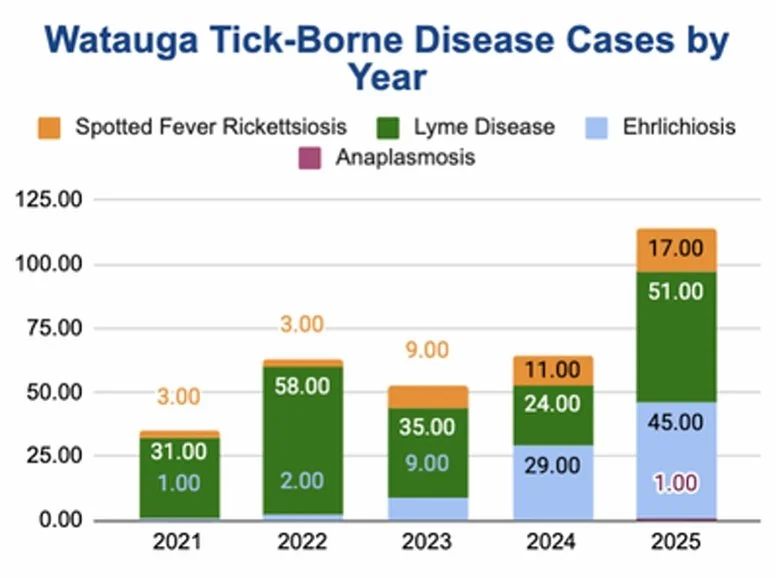
AppHealthCare Communicable Disease Update for Watauga County
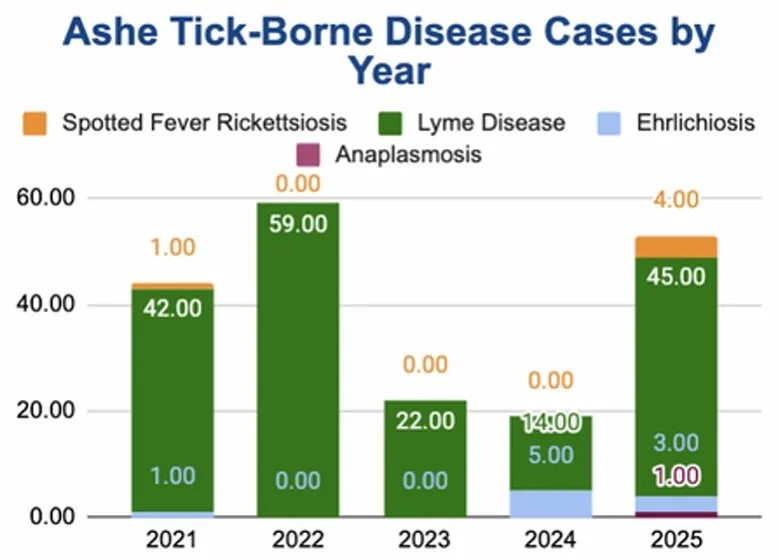
AppHealthCare Communicable Disease Update for Ashe County
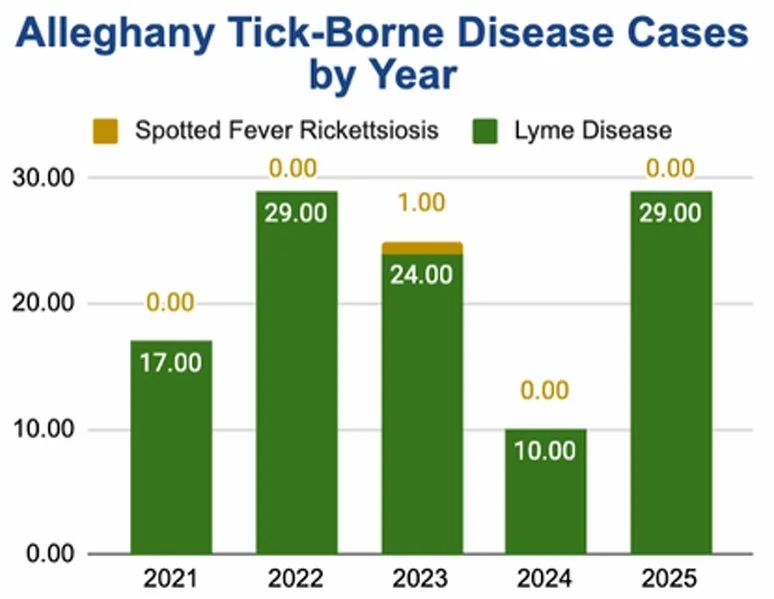
AppHealthCare Communicable Disease Update for Alleghany County
How to safely remove a tick
Use fine tweezers to pull a tick out of the skin, as you want to pull out the entire tick – leaving the head embedded can continue the transmission of disease. Avoid squeezing the tick’s body, as that can cause the tick to regurgitate which will propel any disease it may have into your bloodstream. Be sure to dispose of the tick by containing it within pieces of tape, or flushing it down the toilet, or submerging it in alcohol. Do not crush it with your bare fingers. Wash your hands and the bite area thoroughly with soap and water, and/or rubbing alcohol. Do not ever use petroleum jelly, or fire, or any other method to make the tick back out on its own – these methods are ineffective and dangerous!
In conclusion…
Don’t fear our natural world just because it contains some dangers – but do exercise caution. Know your surroundings: are you in an area where tick-borne diseases are common? Follow as many precautions are you can, and visit a doctor or hospital if you experience symptoms of tick-borne disease.